What is wasted time in-store, and how does TimeSkipper identify it?
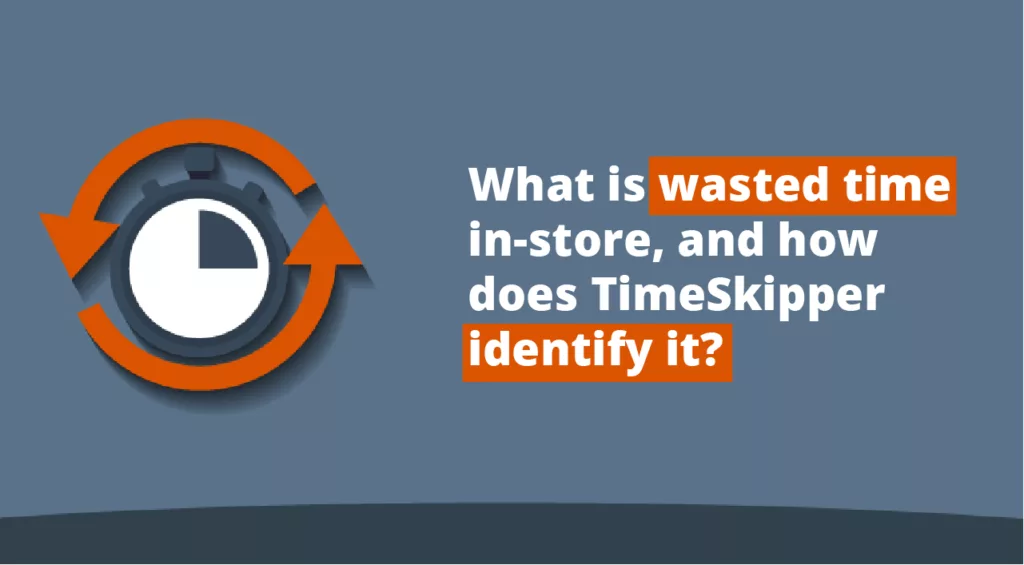
Is wasted time in-store simply linked to tasks being carried out too slowly by employees? So all it would take is to speed up the pace of work to solve the problem… The shortcut is tempting; however, the facts tell a somewhat different story. In fact, in stores, wasted time means time that is poorly […]
Digitizing your point of sale: what impact on your organization?

Driven by competitiveness and profitability challenges, the retail sector must contend with e-commerce competition, adapt to evolving consumer habits, and meet increasingly demanding customer expectations. The stakes are high, store survival itself is on the line. In this context, digitalization stands out as a key solution, allowing stores to reinvent themselves and re-enchant the customer […]
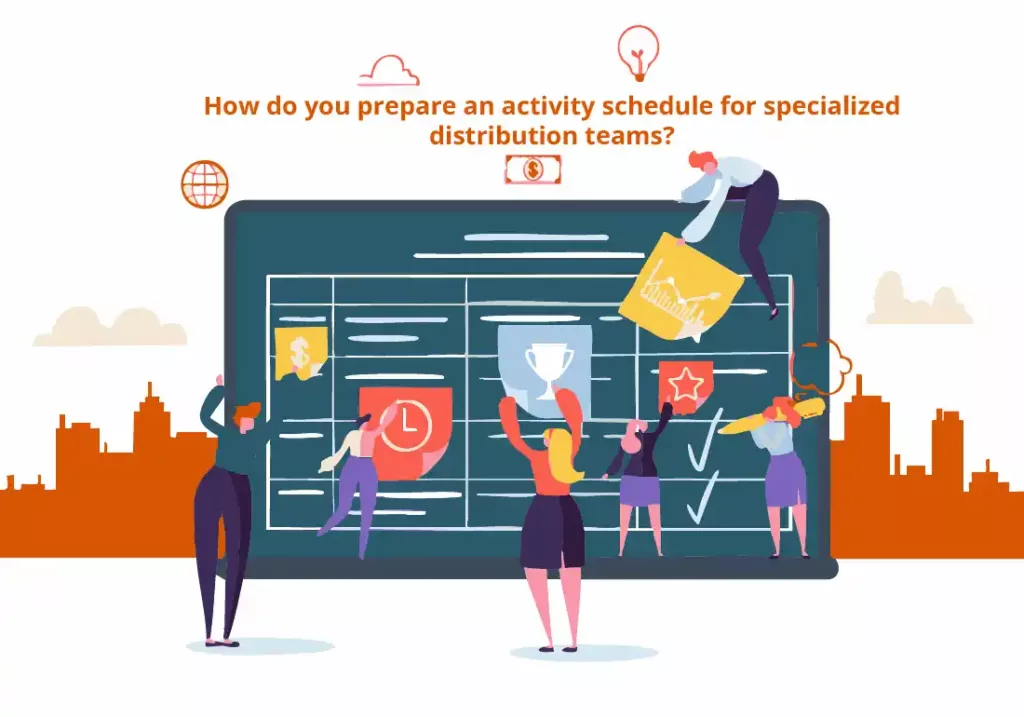
How do you prepare an activity schedule for specialized distribution teams?
L’hypermarché présente un éventail relativement dense de batailles à mener, pour gagner le combat de sa restructuration. Depuis quelques années une problématique supplémentaire s’est invitée, histoire de corser un peu la situation : la difficulté à recruter et à fidéliser les collaborateurs. Quelles en sont les raisons et les impacts, et comment enrayer l’exode des collaborateurs ?
Why is poor time management in stores a major opportunity for the retail sector?

L’hypermarché présente un éventail relativement dense de batailles à mener, pour gagner le combat de sa restructuration. Depuis quelques années une problématique supplémentaire s’est invitée, histoire de corser un peu la situation : la difficulté à recruter et à fidéliser les collaborateurs. Quelles en sont les raisons et les impacts, et comment enrayer l’exode des collaborateurs ?
LEAN Management, a tool for distribution

With the hypermarket format in crisis, supermarkets and convenience stores crushed by competition against a backdrop of price wars and rising costs, and the meteoric rise of e-commerce, whose giants are stealing market share while imposing new consumer trends, it’s hard for retailers to stay on course for profitability! What’s more, almost intrinsic malfunctions (overwork, […]
How to successfully transfer your store’s signage?

The food retail market in France is undergoing a complete overhaul, with Intermarché, Auchan and Carrefour taking over Casino stores. These brand changes should boost the market share of these 3 banners, provided that each acquired store builds loyalty among its former customers, recruits new ones and makes them want to spend more, more often. […]
How can you increase the conversion rate at your point of sale?

A l’heure où l’utilité – et donc la rentabilité – de l’heure de travail est devenue un enjeu majeur de la distribution quelques bonnes questions doivent se poser : quel est le coût marginal lié à la présence d’une personne ou à une heure de travail supplémentaire par rapport à ce qu’elle rapporte ? De même sait-on ce que l’on perd en termes d’image, de chiffre d’affaires et de part de marché si l’on réduit trop le conseil à la vente ou les tâches liées à la bonne tenue du linéaire dans les modèles libre service ? Le point avec Timeskipper
Top 5 customer irritants and how to deal with them

Attente en caisse, manque de conseil, ruptures de stock, point de vente mal tenu… Qui n’a jamais été confronté à l’un de ces irritants majeurs en magasin, susceptible de saboter une expérience d’achat, et même conduire à la perte de ventes ? Si ces points de friction récurrents sont bien connus de l’ensemble de la distribution, la mise en place de diverses solutions, n’a jamais permis de totalement les enrayer, avant que le pilotage d’activité se révèle être LE moyen d’y remédier efficacement. Explications.
What is activity management?

Created to optimise efficiency within industrial production lines, activity management helps teams to organise their work within optimised time schedules, the need for which is becoming increasingly obvious in most business sectors. Work environments, processes, social behaviours and technologies are changing constantly and rapidly, requiring tailored adaptation and responsiveness. And it is precisely this operational […]
Managing the components of the marketing mix in food retailing with Timeskipper
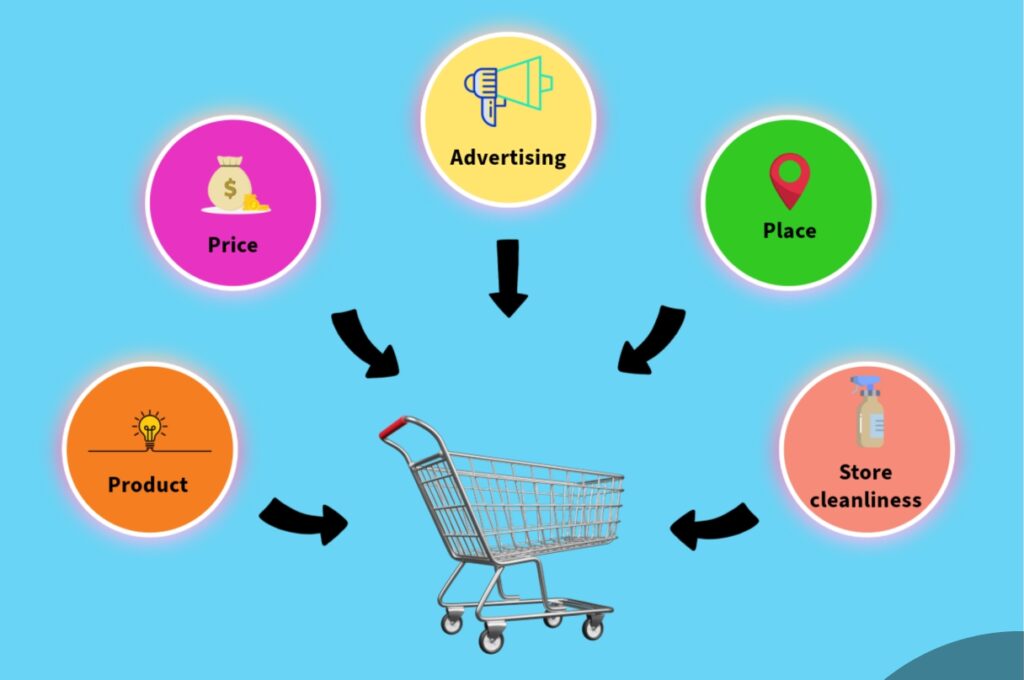
Product, price, promotion and placement: these four main pillars of the marketing mix comprise the operational strategies aimed at bringing the company and its market together. With the customer experience at the heart of today’s concerns in supermarkets, cleanliness is an essential fifth driver for the point of sale. The Timeskipper activity management platform can […]
How do activity management and workforce management differ?

The terms “activity management” and “workforce management” are often used to define resource management. But while both solutions involve managing and optimising time and people, they come from different starting points and employ different approaches. Workforce management is based on an HR culture and is used to optimise work schedules: itschedules the right number of […]
How can department managers be given more autonomy and responsibility?

The Covid crisis speeded up changes in how people relate to work. Remote working and flexibility are now seen as normal, and this means greater autonomy and responsibility for company employees. In retail, where you need to be on hand to stock shelves, for example, this type of organisation is more difficult to set up. […]
5 reasons to set up an activity management tool in your points of sale

There’s no rest for distribution! During the health crisis, the sector’s transformation accelerated, and this phenomenon has continued in a context of strong economic and social tensions. Today’s challenge is to maintain, if not increase, market share by offering customers the best possible experience combined with an attractive and, above all, competitive price. Inflation and competition make […]
Distribution management: the art of leadership

In the midst of a generational and social context, where relationships with each other and hierarchical behaviour have significantly changed, the distribution sector is going to have to readjust its management approach. It is not uncommon to find that employees have lost trust in their management and there is often a lack of motivation among staff. Most […]
What levers can be used to fight the effects of inflation on store organization and profitability?
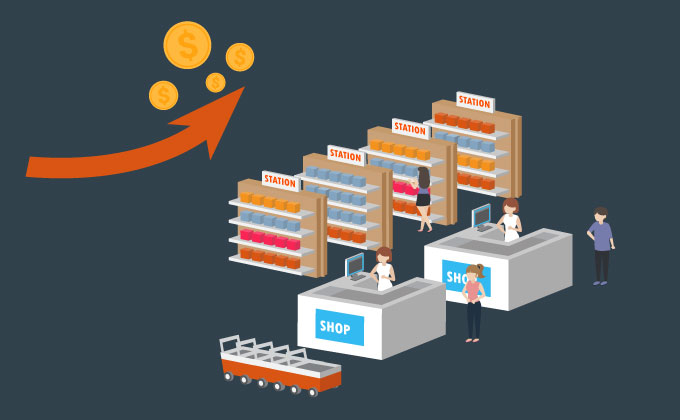
Inflation erodes store profitability and requires teams to adjust their work organization:
– taking into account daily variations in volumes and supply uncertainties
– giving priority to value-added tasks
– by assigning these tasks to the right person at the right time.
To achieve this, a workload calculation and management tool is necessary.
The significant challenges that tomorrow’s pharmacies will face

Just four years ago, we discussed the pharmaceutical ecosystem’s transformation and the complexity of the economic environment in which it was taking place. Although the evolution is undeniable, structural restrictions are still present, and specific difficulties are more evident.
What are the new challenges for sporting goods distributors, and what are the impacts on their business?

Amid an economic and geopolitical slump, sporting goods retailers face significant constraints like all other retail players. Indeed, they have to juggle between logistic uncertainties, supply difficulties, disruptions, and shortage of manpower while containing the increase in the price of products and energy … a rather complicated situation that degrades the profitability of the players. Moreover, the short-term outlook needs to improve and will undoubtedly significantly impact the evolution of volumes.
And to spice things up, let’s add that within this environment, guaranteeing a high level of service and the assurance of an ultra-quality image are not options!
Despite this high level of instability, sporting goods distributors can still count on exploiting growth drivers: major sporting events, opportunities linked to societal trends, investment capacities, innovation in customer experience, etc.
Nevertheless, the context impacts the activity of the points of sale and the organization generally: what are the stakes, and how to respond to them by seizing development opportunities?
The point with Timeskipper …
In 2023, let’s save margins!

Maintaining activity by controlling costs while continuing to invest will enable us to limit the decline in profitability for 2023 and emerge stronger from this crisis. – let’s be lucid but remain positive – is that levers exist and that stores can capture them thanks to activity management and implementing innovations.
It remains now to know and follow the proper steps rigorously. Details by Timeskipper …
Do-it-yourself stores: how to balance the workload/capacity ratio fairly?

The DIY sector has experienced a real upturn over the last two years. However, there have been some signs of weakness: inflation, supply difficulties, delivery delays linked to the Covid crisis and the conflict in Ukraine, and volume drops in certain market segments… An environment that makes it too difficult to win market shares is in full swing on all fronts! In other words, it’s a tough challenge you’re your teams!
Food retailing: 3 ways to optimise self-service operational teams’ activities
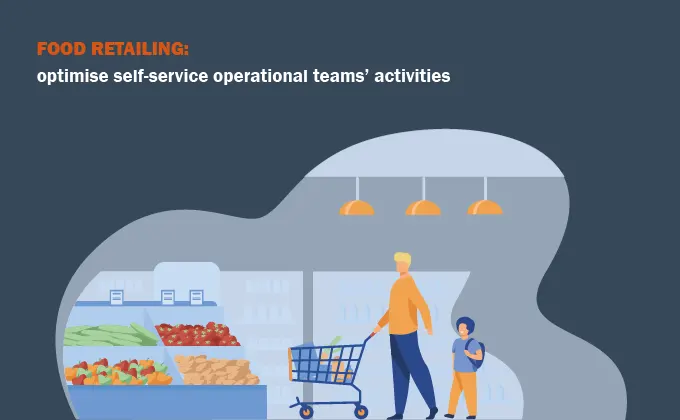
While business volumes in food retailing are encouraging, the economic equation is not entirely rosy. Indeed, price inflation is looming, competition is increasing, and the multiplication of distribution channels is causing the operational costs of the brands to soar. In addition, the human environment within the teams is complex. To overcome this multi-faceted problem, three levers must be activated simultaneously in order to find new sources of efficiency. Here are some explanations.